
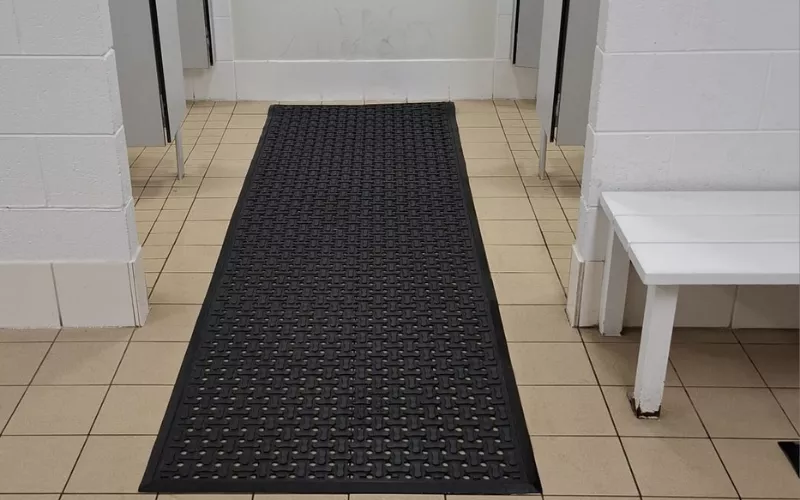
Why standing on hard floors all day costs more than it looks, and how the right matting fixes it
Standing on a hard floor for an hour or two rarely feels like much. Standing on it for an eight or ten hour shift is a different story. Ask anyone who works a checkout, a production line, a commercial kitchen or a packing bench, and they will tell you exactly which part of the day their feet, knees and lower back start to complain. Employers often chalk this up as an unavoidable part of the job, but a growing body of workplace research says otherwise. The floor itself is a controllable variable, and anti-fatigue matting is one of the simplest, lowest-cost interventions a Melbourne business can make to reduce standing fatigue and support a more productive team.
This article looks at what actually happens to the body during prolonged standing, how anti-fatigue mats work, which industries benefit most, and how to choose the right mat for your workplace.
The Hidden Cost of Standing on Hard Floors
Concrete, tile and vinyl are common commercial flooring choices because they are durable and easy to clean, but they are also completely rigid. Every time a foot lands on a hard surface, the body absorbs that impact with almost no give. Over a full shift, that adds up to thousands of small shocks travelling through the feet, ankles, knees and lower back. Staff respond by shifting their weight, locking their knees, or leaning on equipment to take pressure off, none of which solve the underlying problem and all of which can introduce new strain patterns of their own.
Fatigue from standing is cumulative rather than sudden. It rarely shows up as a single reportable incident, which is exactly why it gets underestimated. Instead, it shows up gradually, as reduced concentration late in a shift, more frequent short breaks, higher staff turnover in physically demanding roles, and a steady trickle of musculoskeletal complaints that never quite become a formal WorkCover claim but still cost the business in absenteeism and reduced output.
What Happens to the Body During Prolonged Standing
Occupational health research consistently links prolonged static standing with reduced blood circulation in the legs, increased pressure on the joints of the feet and knees, and lower back strain from postural compensation. Standing still is, counterintuitively, often more fatiguing on hard flooring than walking, because the muscles in the legs are held in a fixed position rather than moving rhythmically. Blood tends to pool in the lower legs, which is why staff on their feet all day often describe swelling, heaviness or aching by the end of a shift.
None of this is really about the floor being uncomfortable in the moment. It is about the accumulated physical cost of a full shift with no cushioning, which is precisely the problem anti-fatigue matting is designed to solve.
How Anti-Fatigue Mats Actually Work
A quality anti-fatigue mat introduces a small amount of controlled give underfoot. That cushioning encourages subtle, continuous micro-movements in the calf and foot muscles as the body naturally adjusts its balance, rather than holding a single rigid stance for hours. Those micro-movements act like a low-level pump, encouraging blood flow back up the legs and reducing the pooling and heaviness associated with static standing. The result is less muscular fatigue, better circulation, and noticeably less strain on the knees and lower back by the end of a shift.
Not every mat achieves this. Cheap, overly firm matting can feel supportive at first but fails to provide genuine cushioning over a full shift, while mats that are too soft can create instability, which is its own safety concern. Our anti-fatigue mats are selected specifically for commercial and industrial use, balancing cushioning with a stable, slip-resistant surface and bevelled edges to reduce trip hazards at the mat's border.
Industries That Benefit Most
Anti-fatigue matting delivers the biggest impact in roles where staff are largely stationary for long periods, rather than constantly walking.
- Commercial kitchens: chefs and kitchen hands often stand in the same one or two square metres for an entire service, frequently on wet or greasy tiled flooring.
- Retail checkouts and reception desks: customer-facing roles rarely allow staff to sit, even during quiet periods.
- Manufacturing and production lines: repetitive tasks performed standing in one spot are a textbook case for anti-fatigue matting.
- Warehousing pack benches: packing and quality control stations combine standing fatigue with repetitive arm movement.
- Trade and workshop environments: workbenches, lathes and assembly stations all involve long stretches of static standing on concrete.
Interestingly, the roles that benefit most are not always the ones businesses think of first. A receptionist standing at a counter for a full shift experiences very similar physical strain to a warehouse packer, even though the two roles look nothing alike on paper.
Signs Your Workplace Needs Anti-Fatigue Matting
Most businesses do not proactively assess standing fatigue, they simply notice the symptoms without connecting them to the floor. A few patterns are worth watching for.
- Staff informally rotating off certain stations more often than others, without being asked to.
- Recurring, low-level complaints about sore feet, knees or lower backs from the same roles.
- A noticeable dip in accuracy or speed in the final hour or two of a shift.
- Higher turnover in physically demanding, standing-based roles compared with the rest of the business.
- Staff bringing in their own foam mats or standing pads, which is a strong sign the workplace has not addressed the issue itself.
That last point comes up more often than businesses expect. When staff start solving a comfort problem themselves with mismatched, non-commercial matting, it usually means the issue has been felt for a while before anyone raised it formally.
Choosing the Right Anti-Fatigue Mat for Your Workplace
Not every anti-fatigue mat suits every environment, and getting the choice wrong reduces the benefit considerably.
- Wet vs dry environments: kitchens and wash-down areas need mats with drainage holes or channels, not solid foam that traps moisture and bacteria underneath.
- Chemical or oil exposure: workshops and factory floors need a mat material rated for oil and chemical resistance so it does not degrade or become slippery.
- Thickness and density: too thin and the cushioning effect disappears, too thick or soft and staff can feel unstable, particularly if they are also moving trolleys or equipment.
- Edge design: bevelled edges reduce trip hazards where the mat meets the surrounding floor, which matters most in high traffic zones.
- Size and placement: the mat needs to cover the actual working footprint of the role, not just a token square in front of the workstation.
Anti-Fatigue Mats and Productivity: The Business Case
Comfort improvements are easy to dismiss as a soft benefit until they are framed in business terms. Staff who are less fatigued by mid-shift tend to maintain concentration and output more consistently through to the end of the day, rather than visibly slowing down in the final hours. Reduced musculoskeletal strain also means fewer staff quietly nursing sore backs or knees, which translates to fewer sick days, less presenteeism, and lower turnover in physically demanding roles where recruitment and retraining costs are already high.
There is also a recruitment and retention angle that is easy to overlook. In tight labour markets, small workplace comfort improvements can be part of what keeps experienced staff in physically demanding roles rather than moving on to a competitor. A workplace that visibly invests in staff comfort, through something as simple as quality matting, sends a signal that goes beyond the mat itself.
It is also worth noting what anti-fatigue matting is not. It is not a substitute for job rotation, seating where practical, or proper footwear, and it will not fix a role that genuinely requires redesign. What it does very reliably is remove one of the largest, most consistent sources of standing fatigue at a cost that is low relative to almost any other workplace comfort intervention available.
Rental vs Buying an Anti-Fatigue Mat
Anti-fatigue mats absorb constant compression, oil, dust and general wear, and they lose their cushioning effect long before they look visibly worn out. A mat that has flattened underfoot might still look fine but no longer provide meaningful fatigue relief. Renting solves this by building regular replacement into the service, so your team is never standing on matting that has quietly stopped working. It also removes the need to manage cleaning in-house, which matters for mats used in kitchens or food handling areas where hygiene standards apply. You can read more about the full case for renting versus buying on our why rent page, and many businesses combine anti-fatigue matting with our
dust control mats at entrances and walkways for a complete flooring solution across the site.
Frequently Asked Questions
How long does it take to feel the benefit of an anti-fatigue mat?
Most staff notice a difference within the first few shifts, particularly by the end of a long day. The cumulative benefit, in the form of fewer aches and better end-of-shift concentration, tends to build over the following weeks as the reduced strain adds up.
Can anti-fatigue mats be used in wet or greasy areas?
Yes, but the mat needs to be designed for it. Kitchens, wash bays and similar environments need matting with drainage and a slip-resistant surface suited to wet conditions, rather than a general-purpose foam mat intended for a dry office setting.
Are anti-fatigue mats a trip hazard?
A well-designed commercial mat should not be, provided it has bevelled edges and sits flat against the surrounding floor. This is one of the main reasons to source matting from a commercial supplier rather than a generic retail product, which often lacks proper edge design.
How often should anti-fatigue mats be replaced?
It depends on traffic and use, but cushioning typically degrades well before a mat looks visibly worn. A regular rental swap schedule, rather than a one-off purchase, ensures staff are always standing on matting that is still doing its job.
The workplaces that get the most out of anti-fatigue matting treat it the same way they treat any other piece of safety equipment: matched to the role, checked regularly, and replaced before it stops working rather than after someone complains. Standing fatigue will never show up on an incident report the way a fall does, but the cumulative cost to a team's comfort, accuracy and retention is just as real, and considerably easier to fix.
Want to see whether anti-fatigue matting suits your team?
Prestige Rental Mats offers a free two-week trial with no lock-in contract, so your staff can feel the difference before you commit. Call 1300 308 178 or reach out below to arrange a site visit.