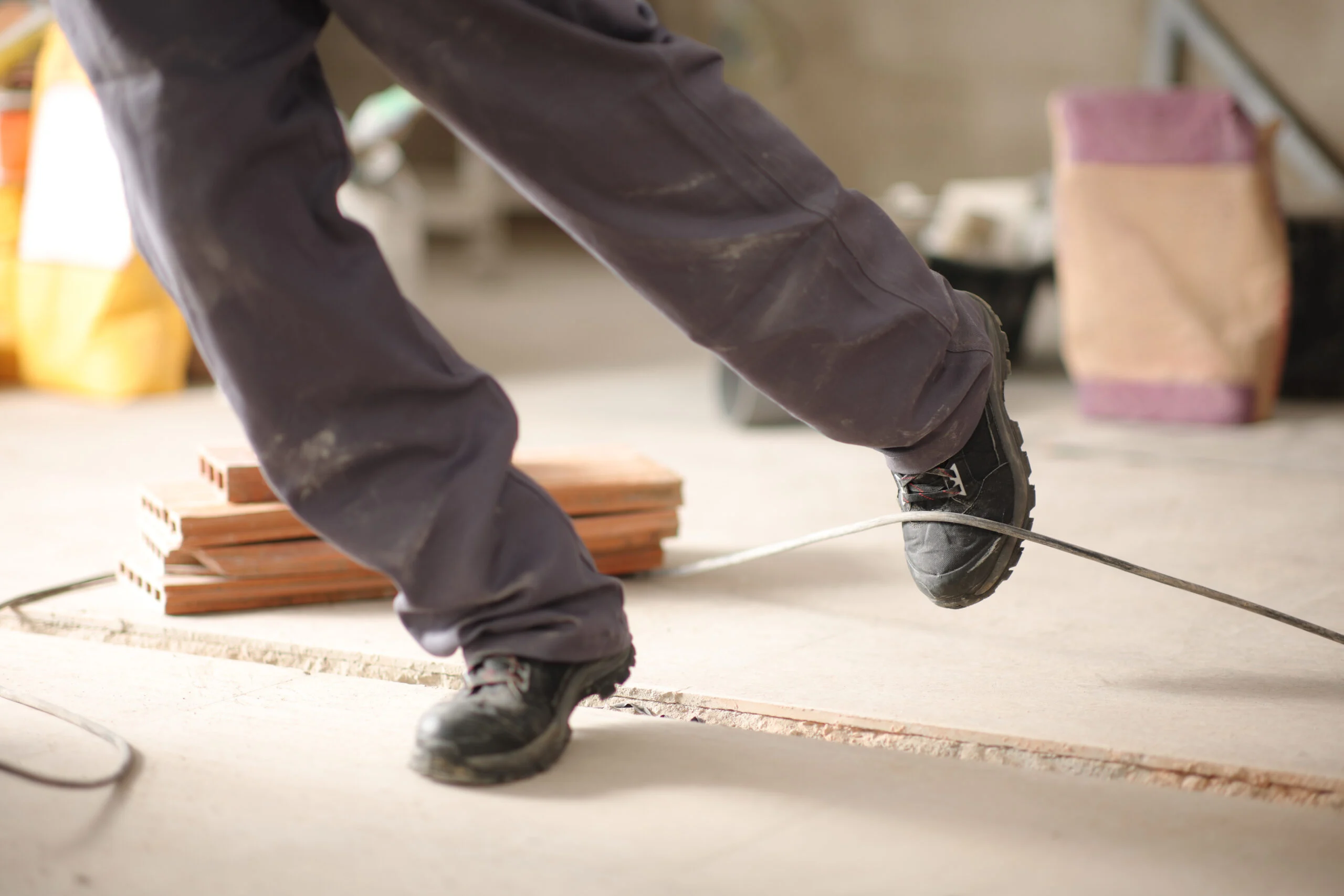
Ask most facility managers what causes workplace injuries and machinery, manual handling or forklifts usually top the list. Flooring rarely gets a mention, yet it is one of the most consistent contributors to lost time injuries across Australian workplaces. Safe Work Australia has repeatedly identified slips, trips and falls among the leading mechanisms of serious workplace injury claims, and a surprising share of those incidents trace back to something as ordinary as an untreated entrance, a dusty walkway or a mat that has simply stopped doing its job.
For businesses managing WHS obligations across offices, warehouses, kitchens and industrial sites, flooring is not a cosmetic afterthought. It is a compliance line item, an insurance consideration and, increasingly, a productivity issue. This article makes the OH&S case for treating commercial floor mats as part of your safety system rather than your cleaning budget, and looks at where a rental mat service fits into a genuinely compliant Melbourne workplace.
Why Flooring Is an Overlooked OH&S Risk
Under the Work Health and Safety Act, a person conducting a business or undertaking (PCBU) has a duty of care that extends to the physical condition of the workplace, and that includes the floor underfoot. In practice, most flooring hazards are treated as a facilities or cleaning issue rather than a safety issue, which means they slip through the cracks of formal WHS audits. Dust, water and grit tracked in from outside reduce slip resistance almost immediately, and a floor that was compliant on installation day can quietly drift out of spec within weeks if nobody is monitoring it.
This is exactly where commercial floor mat rental earns its place in a WHS plan. A mat is a controllable, replaceable, inspectable barrier between a hazard and a person, which makes it one of the simplest hierarchy of controls interventions available to a business.
The problem compounds in shared or multi-tenant buildings, where no single team clearly owns the entrance, the lift lobby or the loading dock. Cleaning contractors mop, but they are not necessarily assessing slip resistance. Facilities teams order matting once, then move on to the next task. Nobody revisits the decision until an incident forces the conversation, by which point the business is reacting rather than managing the risk proactively.
Which Industries Face the Highest Flooring Risk
Some workplaces carry more flooring risk than others simply because of what moves through them. Warehousing and logistics sites deal with constant foot and vehicle traffic, oil, and loose debris from pallets and packaging. Manufacturing floors combine standing workstations with dust, metal filings and, in some cases, coolant or hydraulic fluid. Hospitality and food service venues manage grease, water and rapid customer turnover, often on tiled or polished concrete floors that are unforgiving when wet. Even a professional office is not immune, since reception areas and lift lobbies absorb rain, mud and grit every time the weather turns, particularly through a Melbourne winter.
What all of these environments have in common is that the risk is highest right where people first arrive, and again wherever staff stay in one position for long stretches. A matting plan that only covers the front door, or only covers the factory floor, is solving half the problem.
What Slips, Trips and Falls Actually Cost
Safe Work Australia data has consistently placed slips, trips and falls among the top causes of serious workers compensation claims nationally, alongside body stressing and being hit by objects. The direct costs are the ones most businesses budget for: WorkCover premiums, medical expenses and replacement labour. The indirect costs tend to be larger and less visible, including investigation time, equipment downtime, morale impact on the team, and reputational damage if a client or visitor is injured on site rather than an employee.
Because floor-related incidents are so preventable, insurers and WHS regulators tend to scrutinise them closely after the fact. A documented mat replacement schedule, of the kind a rental provider automatically generates, becomes useful evidence that a business took reasonable, practicable steps to manage a known risk.
There is also a staffing dimension that rarely makes it into the conversation. A single serious injury can take an experienced staff member off the floor for weeks or months, and in tight labour markets like Melbourne's trades, warehousing and hospitality sectors, that gap is not always easy or quick to fill. The flow-on effect on rostering, training and overtime often costs more than the original claim.
AS 4586 Slip Resistance Ratings Explained
Australian flooring safety is generally assessed against AS 4586, which rates surfaces on their slip resistance from P1 (lowest) through to P5 (highest), alongside wet and dry pendulum test results. Entrances, wet areas and food preparation zones typically need a higher P-rating than a dry office corridor, because water and contaminants dramatically reduce traction. The rating that matters is not just what a mat was rated when new, but what it still delivers after weeks of foot traffic, oil, dust and moisture.
This is the practical argument for a managed mat service. Our dust control and protection mats are designed to trap dirt, dust and water at the point of entry, and because they are swapped on a regular schedule rather than left to wear out, your workplace keeps its slip resistance instead of losing it gradually over a contract term.
Where Mats Fit Into a Compliant Workplace
A genuinely compliant matting plan usually covers more than one zone of the building, because different areas create different hazards.
- Entrances and lobbies: the first few metres inside any door are where the majority of tracked-in dirt and moisture end up, making dust control matting the highest priority zone.
- Standing workstations: packing benches, checkouts and production lines benefit from anti-fatigue matting that reduces strain on staff who are on their feet for long shifts.
- Wet or greasy areas: kitchens, wash bays and loading docks need matting rated for slip resistance in wet conditions, not general-purpose carpet matting.
- Communication points: clear signage at floor level reinforces safety procedures where staff and visitors will actually see it.
- Branded and reception areas: safety does not need to look industrial. Logo matting keeps a professional first impression while still meeting slip resistance needs.
For workers on their feet for extended periods, anti-fatigue mats reduce the strain of standing on hard concrete or tiled floors, while
safety message mats keep procedural reminders visible in the exact spots where staff need them most. If your workplace wants to reinforce its brand at the same time as its safety culture,
logo mats let you do both from the same supplier.
Renting vs Buying: The Compliance Angle
Most conversations about renting versus buying floor mats focus on cost, but the compliance angle is just as important and rarely discussed. A purchased mat degrades in slip resistance the longer it sits in place, and unless someone in the business is actively tracking replacement dates, it is easy for a compliant mat to quietly become a hazard. A rental arrangement builds the fix into the service. Mats are inspected, cleaned and swapped on an agreed schedule, so the slip resistance your workplace was assessed on is the slip resistance it keeps delivering.
It also removes the operational burden of vacuuming, washing and storing mats in-house, work that studies on matting maintenance suggest only removes a fraction of embedded dirt compared with professional cleaning. You can read more about the full case for renting on our why rent page.
A Simple OH&S Mat Audit Checklist
You do not need an external consultant to spot the obvious gaps. Before your next WHS review, walk the site with this checklist in hand and note anything that raises a question mark for follow-up.
- Is there a dedicated mat at every external entrance, not just the main door?
- Do wet areas (kitchens, wash bays, loading docks) have mats rated for slip resistance in wet conditions?
- Are staff who stand for more than two hours at a time working on anti-fatigue matting?
- Do any mats show curling edges, flattened cushioning or visible wear?
- Is there a documented schedule for mat cleaning and replacement?
- Are safety messages or procedural reminders visible at relevant floor points?
- Would a WorkCover assessor be able to see evidence of an active flooring safety plan, or only a one-off purchase from several years ago?
If more than one or two of these raise a question mark, it is worth a conversation with a matting provider who can assess the site properly rather than guessing at requirements.
Frequently Asked Questions
Are floor mats a legal WHS requirement in Australia?
There is no single law that mandates a specific mat in a specific location. What the Work Health and Safety Act does require is that a PCBU manages foreseeable risks, and slip hazards at entrances and wet areas are a well-documented, foreseeable risk. Floor matting is one of the most practical, low-cost controls available to meet that duty.
What slip rating should commercial floor mats have?
It depends on the zone. Wet areas and outdoor entrances generally need a higher AS 4586 P-rating than a dry internal corridor. A matting provider can assess each zone of your site and recommend the appropriate product rather than applying one mat type everywhere.
How often should workplace floor mats be replaced?
High traffic entrance mats typically need attention weekly to fortnightly, since dirt and moisture saturation reduce their effectiveness quickly. A rental service builds this into the schedule automatically, which is one of the main reasons businesses move away from one-off purchased mats.
Can floor mats actually reduce WorkCover claims?
Matting will not eliminate every slip or trip risk, but by controlling dust, moisture and standing fatigue at their source, it removes a significant share of the everyday conditions that lead to claims. Combined with a documented maintenance schedule, it also strengthens your evidence of reasonable, practicable risk management if an incident is ever investigated.
Is a mat rental service more compliant than buying mats outright?
Rental is not automatically more compliant on paper, but in practice it tends to produce better real-world outcomes, because the replacement schedule is managed for you rather than left to whoever remembers to reorder. Businesses that purchase mats outright often keep them well past the point where slip resistance has dropped, simply because there is no trigger prompting a replacement.
None of this needs to be complicated. Most Melbourne businesses that get flooring right have done the same three things: mapped the high-risk zones on their site, matched each zone to the right type of mat, and put a maintenance schedule in place so the mats keep working rather than quietly wearing out. The businesses that get it wrong tend to have done none of these, usually because flooring was never treated as a safety decision in the first place.
Ready to check your workplace against WHS best practice?
Prestige Rental Mats has kept Melbourne workplaces clean, safe and compliant for over 20 years, with no lock-in contracts and a free two-week trial on any mat. Call 1300 308 178 or get in touch below to arrange a site assessment.