
Stopping mud, rain and slip hazards at the door before they spread through your workplace
Melbourne weather rarely does anything by halves, and winter is when it takes its toll on commercial flooring. Between persistent rain, tracked-in mud and the grit that builds up on footpaths and car parks, entrances across the city cop months of extra punishment. For most businesses, the first sign of a problem is a puddle forming just inside the door, or a customer commenting on how slippery the foyer feels. By then, the mat that is supposed to be managing the problem has usually already been overwhelmed.
Winter entrance matting is not just a seasonal nicety. It is one of the most effective, lowest-cost ways to protect flooring, reduce slip incidents and keep a workplace looking presentable through the wettest months of the year. Here is what actually happens at a commercial entrance during a Melbourne winter, and how the right matting solves it.
Why Melbourne Winters Are Tough on Commercial Floors
Melbourne's winter is defined less by extreme cold than by relentless, low-grade wet weather, drizzle, sudden downpours and days on end without the ground fully drying out. That pattern is particularly hard on entrances, because there is rarely a clean break for surfaces to dry between weather events. Every person who walks through the door brings a small amount of water, mud or grit with them, and across a busy workplace that adds up to a genuinely large volume of moisture and debris moving indoors every single day.
Unlike a one-off storm, this is a sustained load on the flooring over several months, which is exactly why a mat sized or specified for a dry climate underperforms so quickly once winter sets in.
The Domino Effect of a Wet, Muddy Entrance
A single wet entrance creates a chain of problems that extends well beyond the doormat itself. Moisture and grit get tracked further into the building with every step, meaning cleaning staff are covering a much larger area than just the entry point. Hard flooring becomes measurably more slippery when wet, increasing the risk of a slip incident in exactly the zone where foot traffic, and therefore exposure, is highest. Carpeted areas absorb moisture and start to smell musty if it is not addressed quickly. And first impressions suffer, since a wet, muddy foyer is one of the fastest ways to make a workplace feel poorly maintained to a visiting client or customer, regardless of how well the rest of the site is run.
None of these issues are dramatic on their own, but together they represent a steady drain on cleaning resources, presentation standards and safety margins for months at a time.
What an Unmanaged Winter Entrance Actually Costs
It is easy to treat a wet foyer as a minor inconvenience rather than a cost centre, but the numbers add up faster than most businesses expect. Cleaning staff spend measurably more time mopping and drying floors that would otherwise be a quick daily wipe-down. Carpeted reception areas and lift lobbies that stay damp for weeks at a time are more prone to odour and premature wear, which shortens their replacement cycle. Slip incidents, even minor ones that do not result in a formal claim, still cost staff time, an incident report and, in customer-facing businesses, a moment of embarrassment in front of the exact people the business is trying to impress.
None of these costs show up as a single line item anywhere, which is exactly why they are so easy to underestimate. They are spread across cleaning hours, maintenance budgets and the occasional awkward conversation with a client who slipped on the way to a meeting.
Beyond the Front Door: Other Winter Risk Zones
The main entrance gets most of the attention, but it is rarely the only part of a site affected by winter weather. Car park access doors and stairwells connecting to underground parking see heavy moisture transfer as staff and visitors arrive straight from wet vehicles. Staff-only entries and loading docks are often left without any matting at all, despite carrying just as much wet weather traffic as the customer-facing entrance, simply because nobody outside the business ever sees them. Internal doorways between an unheated warehouse and an office or amenities area also collect condensation and tracked-in moisture during Melbourne's colder mornings, particularly where there is a noticeable temperature difference between the two spaces.
A genuinely winter-ready matting plan accounts for all of these points, not just the one visitors walk through first.
How Entrance and Dust Control Mats Solve the Problem
Purpose-built entrance matting is designed to intercept moisture, mud and grit at the door, rather than letting it spread through the building. Our dust control and protection mats use a fibre construction that traps dirt and water down at the base of the mat rather than leaving it sitting on the surface, so the entrance stays drier and safer underfoot even during sustained wet weather. Because the mats are part of a scheduled rental service, they are swapped out for clean, dry replacements before they reach saturation point, which is the stage at which a mat stops helping and starts contributing to the puddle problem itself.
This scheduled swap is the part most businesses underestimate. A mat that is never replaced during winter can only absorb so much before it is simply redistributing moisture rather than removing it.
Scraper Mats vs Dust Control Mats: What's the Difference
The two are complementary rather than interchangeable, and a well-designed winter entrance often uses both in sequence. Scraper mats sit right at the threshold, typically just outside or immediately inside the door, and their job is purely mechanical: a coarse surface that physically scrapes mud, gravel and debris off shoes before anyone steps further inside. Dust control mats sit just beyond that, and their job is absorption, pulling in the finer dust, grit and residual moisture that the scraper mat did not catch. Used together, the two-stage approach captures far more contamination than a single mat ever could on its own, which matters most during the months when everyone is arriving with wet shoes.
Matching Mats to Your Entrance Type
Not every entrance needs the same solution.
- High traffic retail or hospitality entrances: need wider, longer matting runs to capture moisture across multiple steps, since a single small mat is quickly walked past.
- Office and corporate lobbies: benefit from matting that performs functionally while still looking presentable, since this is often the first thing a visiting client sees.
- Warehouse and industrial entries: need heavier duty matting that can handle trolleys, pallet jacks and consistent vehicle-adjacent traffic on top of the weather load.
- Loading docks and side entries: are often overlooked in matting plans entirely, despite carrying just as much wet weather traffic as the front door.
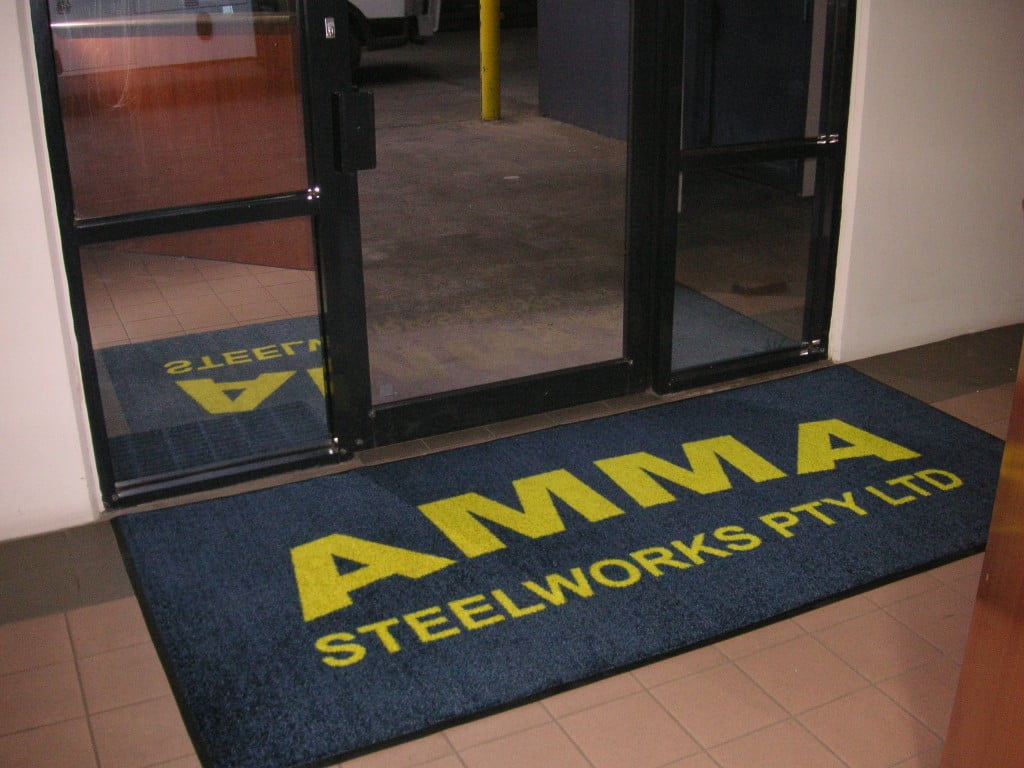
For entrances that double as a brand touchpoint, logo mats let a business manage winter conditions without sacrificing presentation, and
safety message mats are worth considering at entries where a simple caution reminder, such as a wet floor notice, adds an extra layer of protection during the wettest weeks.
How Often Winter Mats Need Changing
During Melbourne's wetter months, entrance mats typically need attention more frequently than the rest of the year, since saturation happens faster and the volume of tracked-in debris is consistently higher. This is where a rental service has a clear advantage over a purchased mat sitting on a fixed, generic replacement cycle. A managed schedule can be adjusted for seasonal demand, so entrances get more frequent swaps exactly when they need it most, without the business having to remember to organise it themselves or absorb the in-house labour of washing and drying mats that never quite get the chance to dry out between shifts.
A Winter-Ready Entrance Checklist
- Is there a scraper mat at the outer threshold of every external entrance in use?
- Is there a dust control mat immediately inside, long enough to capture at least two to three full steps?
- Are loading docks and side or staff entries included in the matting plan, not just the main entrance?
- Is there a visible plan for wet floor signage during and after rain events?
- Are mats being swapped frequently enough to avoid visible saturation by the end of the day?
- Would a visiting client form a good first impression of the entrance right now, on a wet Tuesday morning?
Frequently Asked Questions
How many mats does a commercial entrance need in winter?
Most high traffic entrances benefit from at least two mats in sequence, a scraper mat at the threshold and a longer dust control mat just inside, so moisture and debris are captured in stages rather than relying on a single small mat to do everything.
Can entrance mats actually reduce slip incidents?
Yes. Since a large share of winter slip incidents happen on hard flooring made slippery by tracked-in water, intercepting that moisture at the door before it spreads further into the building directly reduces the exposure, particularly in the first several metres past the entrance where most people are still walking normally rather than watching their footing.
Do winter entrance mats need to be replaced more often than in summer?
Generally yes, because sustained wet weather saturates mats faster and increases the volume of debris being tracked in daily. A rental arrangement allows the swap schedule to flex with the season rather than sticking to a fixed cycle that was set for drier conditions.
Is it worth investing in entrance matting for a short winter season?
Given how much of the year Melbourne spends in wet or unsettled weather, most businesses find the matting earns its place well beyond the coldest months. A rental arrangement also means there is no long-term commitment tying the decision to a single season, since the service can flex as conditions change.
Winter matting is one of those decisions that pays for itself quietly. Nobody notices a dry, well-managed entrance, which is precisely the point. The businesses that get it wrong are the ones customers, staff and visiting clients do notice, usually on the exact wet Tuesday morning when it matters most.
What is the difference between a scraper mat and a dust control mat?
A scraper mat has a coarse, aggressive surface designed to physically remove mud and gravel from shoes at the threshold. A dust control mat has a denser fibre construction designed to absorb finer dust and residual moisture just inside the door. Most well-managed entrances use both, positioned in sequence, rather than relying on either one alone.
Don't let a wet winter catch your entrance off guard.
Prestige Rental Mats delivers, cleans and swaps entrance matting on a schedule built around Melbourne's weather, with a free two-week trial and no lock-in contract. Call 1300 308 178 or get in touch below.